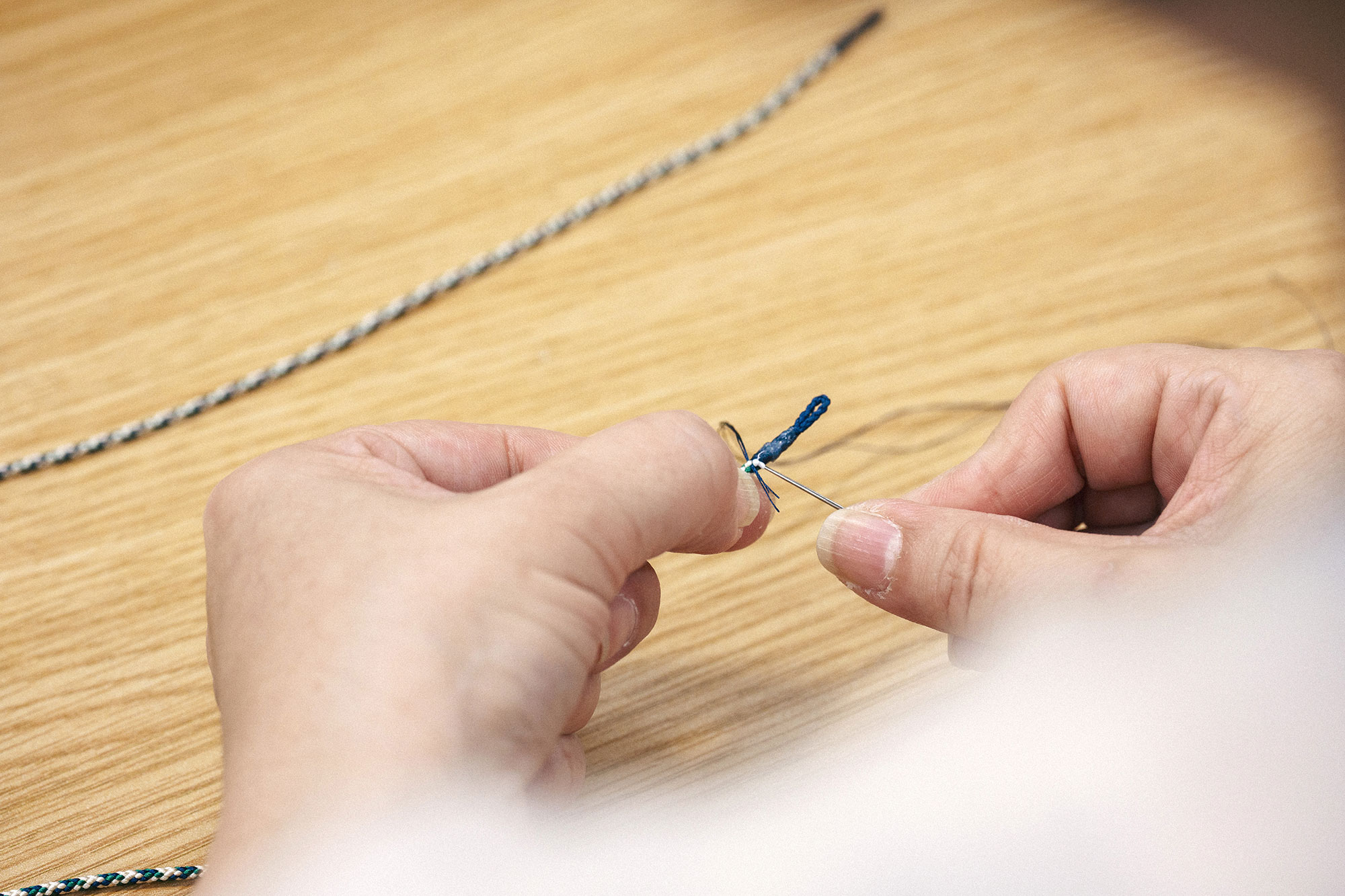
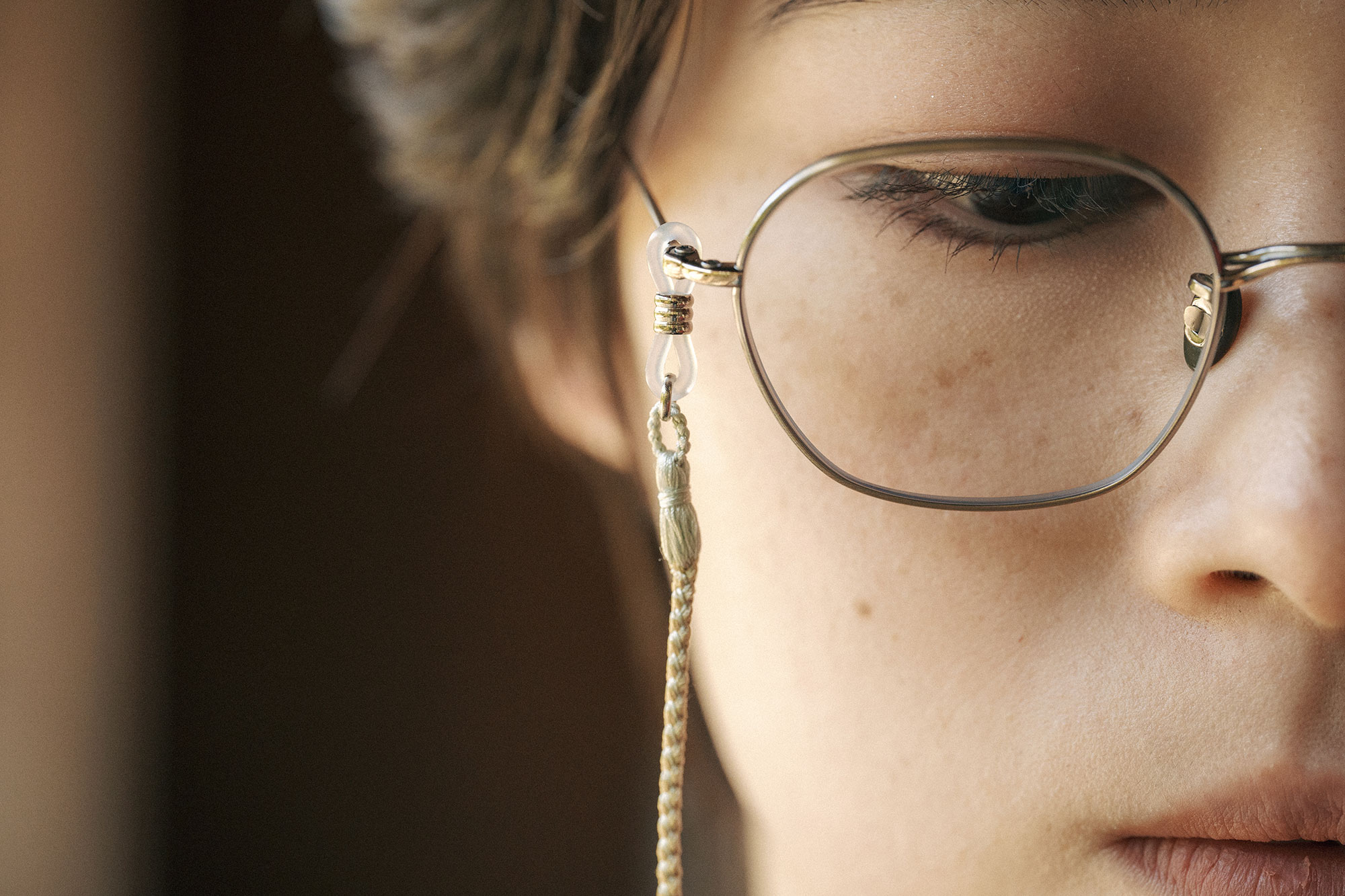
Founded in 1948 in Uji, Kyoto, Showen Kumihimo produces traditional Japanese braided cords using a fully integrated process, from dyeing the threads to finishing the products. While preserving traditional techniques, they create kumihimo that fits modern lifestyles.
We spoke with Mr. Hatta, who currently works in sales department after gaining experience as a craftsman, about the art of kumihimo.

EYEVAN × KYOTO
interview 18
「Fascinated by Kumihimo」
Showen Kumihimo – Mr. Toshi Hatta (Founded in 1948 / Uji City)
About Kumihimo
Carried through time with a distinctive evolution
“In Japan, kumihimo was often used in weapons and armor, like swords and helmets.Japan has a deeply rooted culture of using cords, and the technique of kumihimo is said to have evolved uniquely over time.”
“I’ve been passionate about crafting things since I was a student. I happened to be introduced to this company and joined. Cords are a mysterious material and there isn’t much documentation on them, and intuitively, I think their invention was as revolutionary as discovering fire. The fact that they’ve remained as colorful and beautiful objects to this day is incredibly fascinating, and I just became more and more drawn to them.”
“I’ve been passionate about crafting things since I was a student. I happened to be introduced to this company and joined. Cords are a mysterious material and there isn’t much documentation on them, and intuitively, I think their invention was as revolutionary as discovering fire. The fact that they’ve remained as colorful and beautiful objects to this day is incredibly fascinating, and I just became more and more drawn to them.”
Commitment to Excellence
Sensing the Subtle Differences
“First and foremost, the cord has to be beautiful.
Even under identical conditions, cords can sometimes come out slightly uneven. We conduct inspections at several stages to ensure quality.”
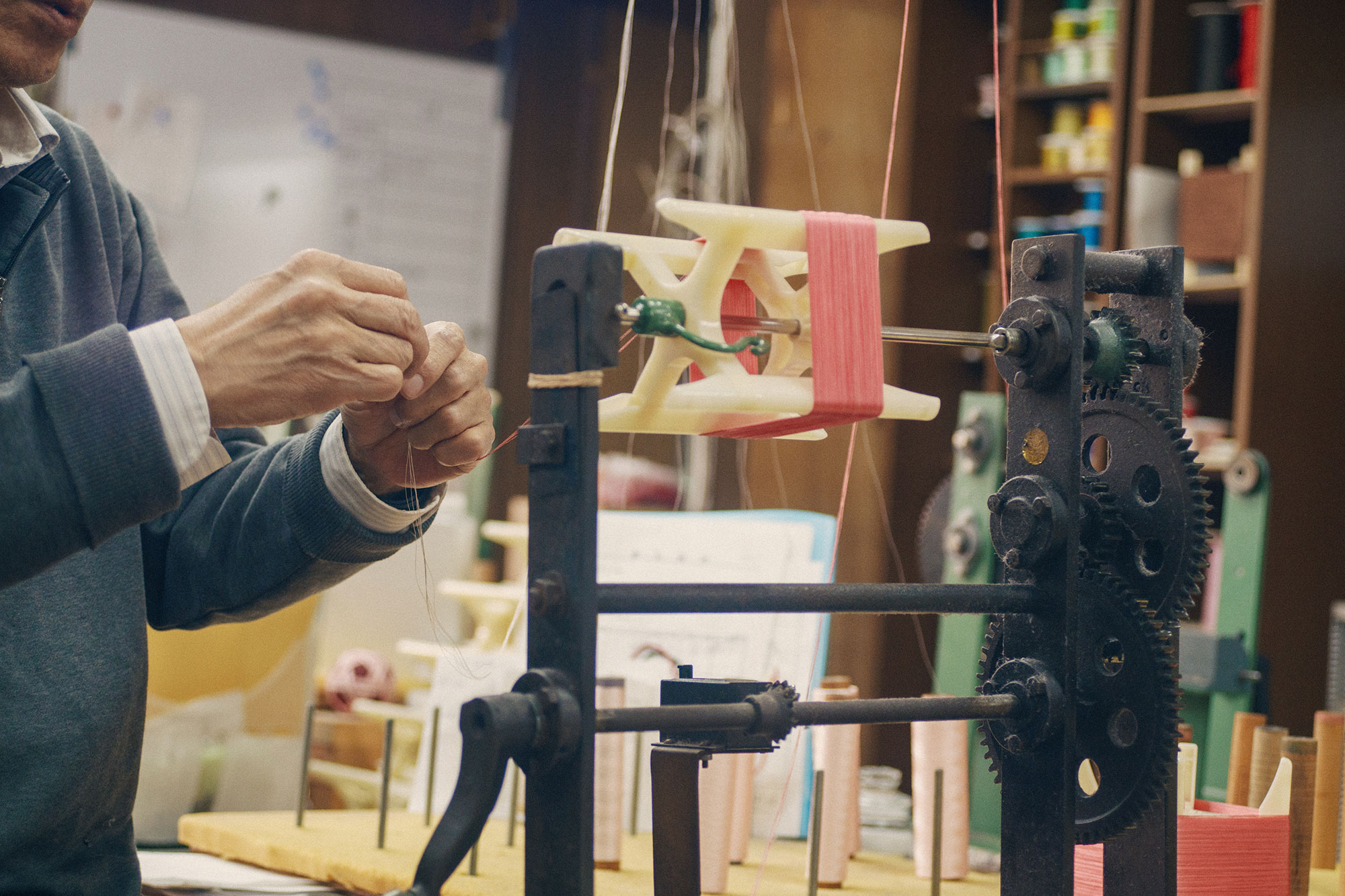
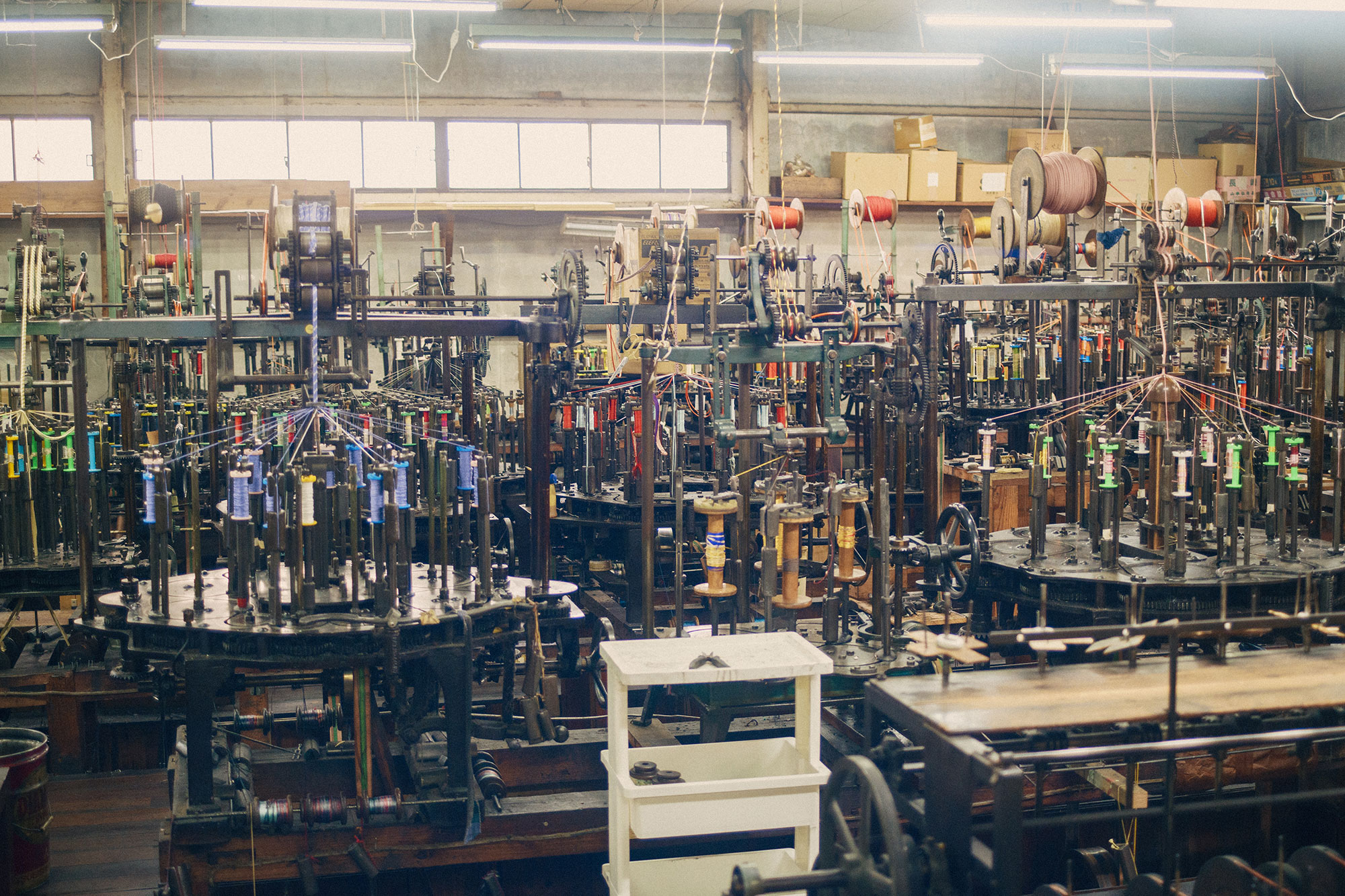
“Even when making the same cord, sometimes it suddenly turns out irregular. The machines are very analog, so even small malfunctions can affect the results.
We constantly pay attention to subtle signs, whether the thread feels slightly off to the touch, or if we notice a bit of fuzz on the cord, and make careful adjustments as needed.
Even though it’s machine-braided, it’s not something that can be done mindlessly, that’s one of the challenges.”
Even under identical conditions, cords can sometimes come out slightly uneven. We conduct inspections at several stages to ensure quality.”
“Even when making the same cord, sometimes it suddenly turns out irregular. The machines are very analog, so even small malfunctions can affect the results.
We constantly pay attention to subtle signs, whether the thread feels slightly off to the touch, or if we notice a bit of fuzz on the cord, and make careful adjustments as needed.
Even though it’s machine-braided, it’s not something that can be done mindlessly, that’s one of the challenges.”
As True Artisans of Kumihimo
“We began producing our own original products about 20 years ago.
We want our products to be seen as authentic kumihimo pieces created by true kumihimo artisans. So, we pay special attention to techniques that aren’t immediately obvious and to unique design elements that are difficult to imitate.”
We want our products to be seen as authentic kumihimo pieces created by true kumihimo artisans. So, we pay special attention to techniques that aren’t immediately obvious and to unique design elements that are difficult to imitate.”

On Inheritance
Tradition and Challenges
“On the second floor of our shop, we hold kumihimo classes, where some students pursue and obtain certification as traditional artisans. We try to create opportunities for them to use those qualifications, for example, by commissioning work from them.
While we’re working to pass on the skills this way, handmade kumihimo products are expensive, so they don’t receive many orders. That makes it difficult to offer stable work, which is a major challenge.”
While we’re working to pass on the skills this way, handmade kumihimo products are expensive, so they don’t receive many orders. That makes it difficult to offer stable work, which is a major challenge.”
Next Steps Forward
Pursuing New Possibilities
“In the last five years or so, we’ve seen an increase in inquiries from overseas.
We’re now receiving requests in new fields, like jewelry and interior art pieces areas we hadn’t worked with before. But without proper knowledge, it’s hard to break into those markets, so we’re constantly studying dyes and materials.
In Japan, the term kumihimo is widely understood, but we want to reach a global standard, so we’re also rethinking how we make and use kumihimo to share it more broadly with the world.”
We’re now receiving requests in new fields, like jewelry and interior art pieces areas we hadn’t worked with before. But without proper knowledge, it’s hard to break into those markets, so we’re constantly studying dyes and materials.
In Japan, the term kumihimo is widely understood, but we want to reach a global standard, so we’re also rethinking how we make and use kumihimo to share it more broadly with the world.”